How to track car maintenance
A good car maintenance tracker is less about perfect spreadsheets and more about a habit: every fill-up and service gets a date, mileage, and note. Here’s a practical way to track car maintenance whether you DIY or use a shop—and turn those notes into a reliable maintenance log.
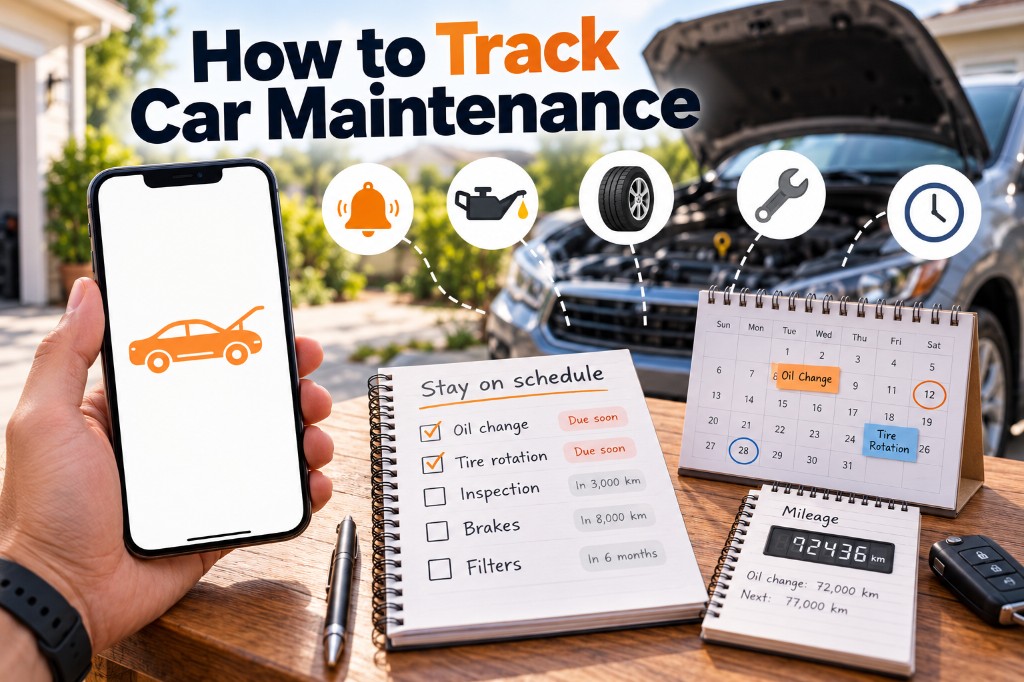
Start with the basics every time
If you only capture four fields, make them date, odometer, what was done, and cost. That alone builds a timeline you can trust for warranties, insurance, and resale.
- Date of the work or fill-up
- Current odometer reading
- Service type or fuel amount
- Total cost (and shop or DIY note)
Separate fuel, services, and expenses
Mixing everything into one list gets noisy. Fuel belongs with economy tracking; services belong with intervals and repairs; expenses cover insurance, registration, parking, and accessories.
Use mileage and time reminders
Oil, rotations, and inspections are easy to forget. Set reminders by miles or months, then log the completed job so the next due date is clear. Pair your log with a model schedule—like a Toyota RAV4 or Honda Civic maintenance schedule—so intervals match your vehicle.
Keep proof in your maintenance log
Photos of receipts, tire tread, or fluid labels turn a vague memory into documentation. Attach them to the same entry instead of a random camera roll album.
Related: How to keep a service history · How much does it cost to maintain a car? · Car maintenance checklist · Toyota RAV4 maintenance schedule · Honda Civic maintenance schedule 2016–2021 (10th gen) · Honda Civic maintenance schedule 2022–present (11th gen)