How to keep a service history
Car service history is the story of how a vehicle was cared for. Buyers, dealers, and warranty administrators look for consistent vehicle maintenance records—not just a stack of faded receipts. Here’s how to keep car service records you’ll actually use later.
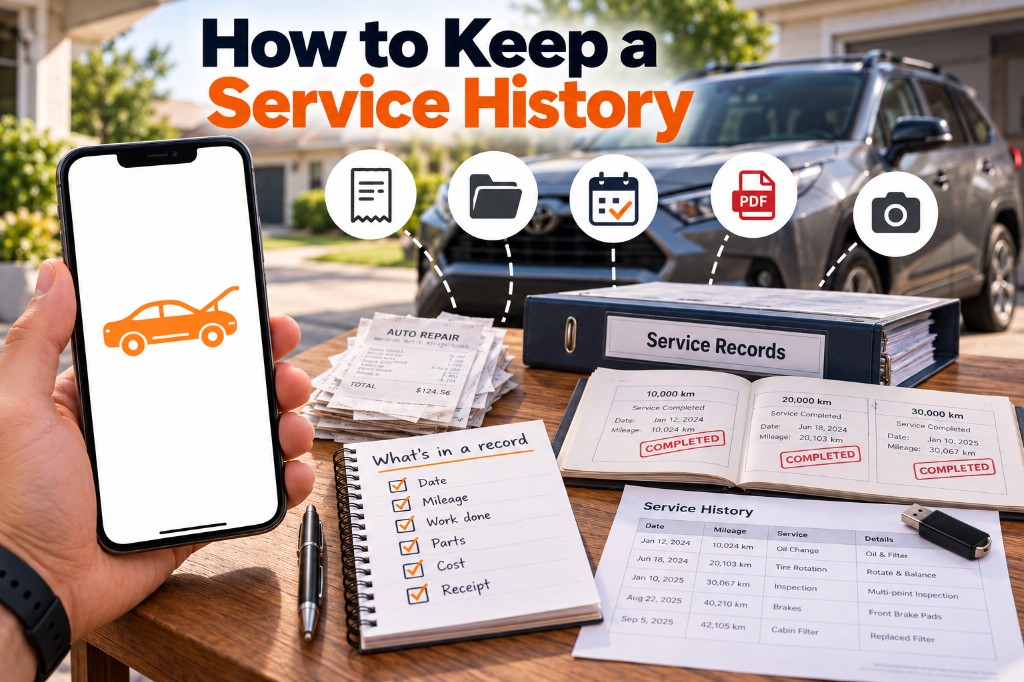
What belongs in a service history
- Routine maintenance — oil, filters, rotations, fluid changes
- Repairs — parts replaced, diagnosis notes, labor
- Mileage at service — ties work to vehicle wear
- Who did the work — DIY, dealer, or independent shop
- Documents — invoices, warranties, inspection reports
Paper vs digital vehicle maintenance records
Glovebox folders get lost and fade. Digital logs are searchable, backed up, and easier to hand to a buyer as a clean timeline. If you keep paper, photograph each receipt the day you get it.
Make it usable later
Write part numbers and fluid specs while they’re fresh. Future-you will thank you when matching brake pads or oil viscosity without guessing. Match entries to your model’s schedule—for example Camry or Corolla intervals—so the history lines up with recommended service.
Why complete records raise resale confidence
A dated, mileage-stamped history shows the car wasn’t neglected. Even imperfect DIY logs beat “I think the dealer did the oil.”
Related: How to track car maintenance · How much does it cost to maintain a car? · Car maintenance checklist · Toyota Camry maintenance schedule · Toyota Corolla maintenance schedule