Blog

Ford Escape Maintenance Schedule – 2020–2024

18 min read

The complete 4th-gen Ford Escape maintenance schedule for 2020–2024—covering the 1.5L EcoBoost, 2.0L EcoBoost, and Escape Hybrid with Ford’s Intelligent Oil-Life Monitor, Motorcraft filter numbers, and the oil viscosity that differs by engine. Track gas and Hybrid reminders separately in Carmainty so nothing gets mixed up.

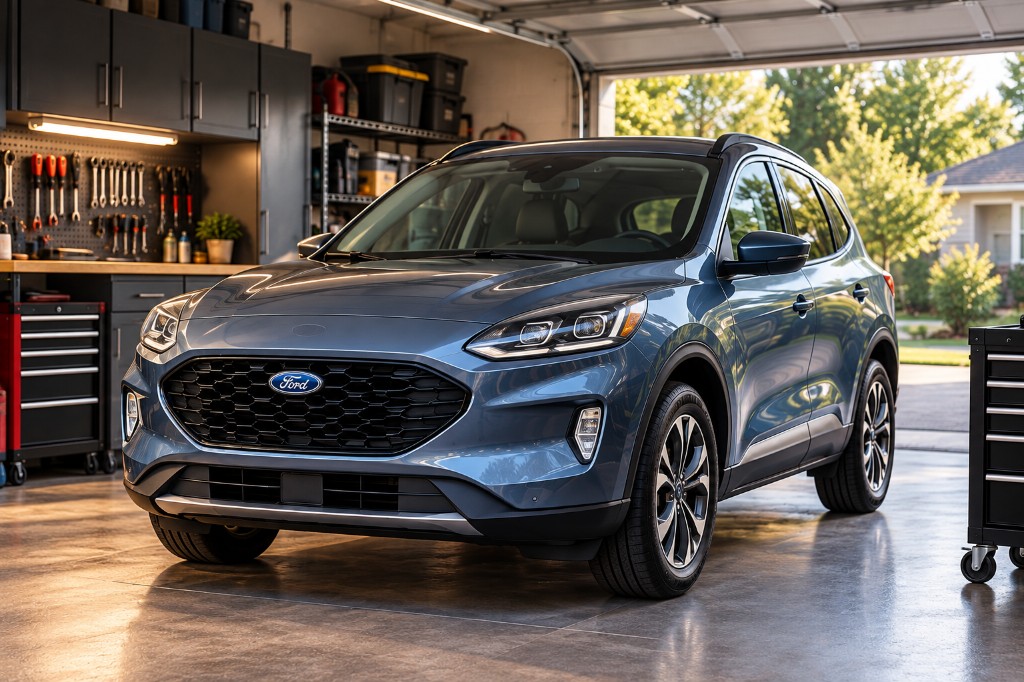
Blue Ford Escape parked in a garage with tools and an open garage door
Confirm your engine before ordering oil or spark plugs. The 1.5 EcoBoost (5W-20), 2.0 EcoBoost (5W-30), and Hybrid (0W-20) use different oil grades, and spark plug part numbers are engine- and year-specific—look them up by VIN on ford.com/parts rather than guessing. Use FL-910S for the oil filter, not FL-2065A.

Quick reference

Ford Escape maintenance schedule 2020–2024 at a glance

Ford’s Intelligent Oil-Life Monitor (IOLM) sets oil timing from real driving—often up to ~10,000 miles (16,000 km) / 1 year. Everything else stacks onto those visits. Treat mileage figures as maximums, not fixed targets, and see the severe-use section if you tow, idle, or make mostly short trips.

IntervalService itemNotes & Motorcraft
Per IOLM / ≤1 yrEngine oil & filterFL-910S · 1.5 → 5W-20 · 2.0 → 5W-30 · Hybrid → 0W-20
Every oil changeTire rotationAWD needs matched tread depth · check pressure
Every 6 monthsBrake inspectionPads/rotors · Hybrid pads often last longer (regen)
Every oil changeMulti-point inspectionFluids, belts, hoses, battery terminals, suspension
Every 20,000 mi (32,000 km)Cabin air filterFP-89 · may supersede to FP-100 · confirm on ford.com/parts
Every 30,000 mi (48,000 km)Engine air filterFA-1939 · many 1.5 / 2.0 EcoBoost Escapes · verify VIN
Every 30,000 mi (48,000 km)Brake fluid inspectionReplace if contaminated · every 2–3 years
~100,000 mi (160,000 km)Spark plugsEngine-specific SP number · confirm by VIN on ford.com/parts
~100,000 mi (160,000 km) (verify engine)Engine coolantMotorcraft-spec coolant per manual · EcoBoost and Hybrid differ
AWD onlyRear drive unit / PTU fluidInspect per manual · sooner if towing or deep snow
Hybrid onlyHybrid system inspectionAt service visits · fault codes, battery cooling air path
Hybrid only12V auxiliary batteryInspect annually after year 3 · replace as needed

Engine-specific — don’t mix up your parts

Escape oil change guide by engine (2020–2024)

The Motorcraft filter is the same on every Escape in most manuals, but the oil viscosity is not. Using 5W-30 in a 1.5 EcoBoost or 5W-20 in a 2.0 EcoBoost is one of the most common DIY mistakes on this generation.

1.5L EcoBoost 3-cylinder

S · SE · SEL (varies by year)

Oil filter
FL-910S
Oil spec
5W-20 (typical)
Oil capacity
Confirm filler cap / manual
Engine air filter
FA-1939
Cabin filter
FP-89
Spark plugs
Confirm by VIN · ford.com/parts

Not FL-2065A. Spark plug numbers are engine- and year-specific—look up by VIN instead of assuming.

2.0L EcoBoost 4-cylinder

SEL · Titanium (varies by year)

Oil filter
FL-910S
Oil spec
5W-30 (typical)
Oil capacity
Confirm filler cap / manual
Engine air filter
FA-1939
Cabin filter
FP-89
Spark plugs
Confirm by VIN · ford.com/parts

5W-30 is the typical grade here—do not copy the 1.5 EcoBoost’s 5W-20 from a friend’s Escape.

2.5L Hybrid (Atkinson-cycle)

SE Sport Hybrid · SEL Hybrid · Titanium Hybrid

Oil filter
FL-910S
Oil spec
0W-20 (typical)
Oil capacity
Confirm filler cap / manual
Engine air filter
FA-1939 · verify by VIN
Cabin filter
FP-89
Spark plugs
Confirm by VIN · ford.com/parts

Hybrid and plug-in builds can differ on air filter and fluids—verify the engine air filter by VIN before ordering FA-1939.

Always check OEM part numbers against your VIN before ordering—cross-reference with your Ford dealer or https://www.ford.com/parts. 1.5 EcoBoost, 2.0 EcoBoost, and Escape Hybrid share Motorcraft FL-910S in many manuals but use different oil viscosities and plug numbers. Confirm the under-hood label.

Detailed schedule

Every service, every part number

Expand each item for OEM numbers, capacities, and owner notes. Always confirm fitment for your year, engine, and drivetrain.

Per Intelligent Oil-Life Monitor

Engine oil & filter · IOLM explained

Viscosity is engine-specific: many 1.5 EcoBoosts use 5W-20, 2.0 EcoBoost uses 5W-30, and Escape Hybrid commonly uses 0W-20. Change within two weeks / 500 miles (800 km) of the oil-change message, and reset the monitor every time.

The monitor tracks engine load, temperature, and trip pattern instead of a fixed counter. On easy highway use it may allow close to 10,000 miles (16,000 km); short trips, towing, and idling bring it down—sometimes well under 7,500.

  • Oil filter (1.5 / 2.0 / Hybrid)FL-910S

    Spin-on Motorcraft FL-910-S in Ford manuals for 2020–2024 Escape gas and Hybrid—not FL-2065A.

1.5 EcoBoost
5W-20 (typical)
2.0 EcoBoost
5W-30 (typical)
Hybrid
0W-20 (typical)
Max gap
Do not exceed 1 year / ~10k mi (~16k km)
FL-910S and FL-2065A are not interchangeable. If the monitor resets early or fails, default to ~5,000 miles (8,000 km) / 6 months until it is repaired.
Check the oil filler cap and your manual for the exact viscosity before every DIY change—engine grades differ even though the filter is shared.
Every oil service

Tire rotation & brake inspection

Rotate and measure tread. AWD Escapes need consistent depths to protect the rear drive unit. Check pressure monthly—TPMS warnings spike with the first cold snap.

Inspect pads and rotors every six months. Hybrid brake pads often last longer thanks to regen, but rotors can rust and glaze on cars that rarely brake hard.

Photograph tread depth into Carmainty at each rotation—useful evidence at trade-in time.

Every 20,000 miles (32,000 km)

Cabin air filter

Replace sooner if HVAC smells musty or airflow drops—city pollen and dusty roads accelerate clogging. Sits behind the glove box on most Escapes.

  • Cabin filterFP-89

    Motorcraft FP-89 in many 2020–2024 Escape manuals; later supersessions (e.g. FP-100) may appear—confirm on ford.com/parts.

Every 30,000 miles (48,000 km)

Engine air filter

Inspect earlier on unpaved roads or in wildfire-smoke seasons. A packed filter is free power left on the table—and a restricted intake on a turbocharged EcoBoost costs response and fuel economy.

  • Engine air filterFA-1939

    Motorcraft FA-1939 for many 1.5 / 2.0 EcoBoost Escapes in the owner’s manual—verify by VIN.

~100,000 miles (160,000 km) (verify engine)

Spark plugs & coolant

Many charts land plugs and coolant near 100,000 miles (160,000 km) on normal service—EcoBoost and Hybrid details differ. Spark plug part numbers are engine- and year-specific, so confirm by VIN on ford.com/parts or with your Ford dealer before ordering.

Use only the Ford-specified coolant for your engine and never mix coolant chemistries. A sweet smell, rising temperature gauge, or low reservoir level are reasons to inspect before the scheduled mileage.

Do not guess a spark plug number from another Escape year or from a different engine—confirm by VIN or ford.com/parts first.
Log the exact plug part number you or the shop installs in Carmainty so the next change is a quick lookup.

Severe service / high mileage

Brake fluid, AWD & drive-unit fluids

Brake fluid absorbs moisture—inspect around 30,000 miles (48,000 km) and replace every 2–3 years or when contaminated. A spongy pedal or ABS warning after wet winters is a reason to service early.

AWD Escapes have a power transfer unit and rear drive unit with their own fluids. Check the owner’s manual for your year and inspect sooner if you tow, drive in deep snow, or notice whining or leaks.

Intelligent Oil-Life Monitor & severe use

Oil-Life Monitor rules & severe-use schedule

The IOLM is the real oil schedule on a 2020–2024 Escape—but it is not a license to ignore the calendar. Ford still wants oil changed at least once a year, and the monitor can only react to conditions it measures. Short trips, towing, stop-and-go traffic, and extreme heat or cold all count as severe use.

Do not wait for the message to disappear on its own. Change oil within two weeks or 500 miles (800 km) of the oil-change message, reset the monitor afterward, and set a yearly reminder in Carmainty in case the monitor never triggers.
Engine oil
Per IOLM · at least yearly · 5,000–7,500 mi (8,000–12,000 km) under severe use
IOLM failure fallback
~5,000 mi (8,000 km) / 6 months until the monitor is repaired
Reset after change
Cluster Settings → Oil Life (menu path varies by year/screen—confirm in manual)
Tire rotation
Every oil change · every ~7,500 mi (12,000 km) if IOLM runs long
Engine air filter
Inspect every 15,000 mi (24,000 km) on dusty roads or in smoke
Brake fluid
Every 2 years if humid, hilly, or towing
Spark plugs
Confirm interval by VIN · severe use may shorten it
AWD / PTU fluid
Inspect sooner for towing or deep snow driving

Escape Hybrid — SE Sport, SEL, Titanium

Escape Hybrid maintenance notes

The Escape Hybrid follows the same oil-life monitor and uses Motorcraft FL-910S, but with 0W-20 oil and a hybrid system that adds its own inspection items. The gas engine cycles on and off, so oil hours are often fewer than miles suggest—but short trips still leave moisture in the crankcase.

Brake pads often last longer thanks to regenerative braking—still inspect rotors for rust and glazing, and replace brake fluid by age rather than pad wear.

Engine air filter and spark plug numbers on hybrid and plug-in builds can differ from EcoBoost cars. Confirm by VIN on ford.com/parts instead of assuming FA-1939 or a plug number from a gas Escape.
Engine oil
0W-20 · Motorcraft FL-910S · per IOLM, at least yearly
Hybrid system inspection
At service visits — check fault codes and battery cooling path
12V auxiliary battery
Test annually after year 3 · replace as needed
Brake fluid
Every 2–3 years · regen systems can hide wear
Brake pads & rotors
Often last longer · inspect rotors for rust
Coolant
Engine and hybrid systems have separate service items—follow the Hybrid schedule
Always check OEM part numbers against your VIN before ordering—cross-reference with your Ford dealer or https://www.ford.com/parts. 1.5 EcoBoost, 2.0 EcoBoost, and Escape Hybrid share Motorcraft FL-910S in many manuals but use different oil viscosities and plug numbers. Confirm the under-hood label.

Master reference

2020–2024 Escape Motorcraft part numbers (verify engine)

ServiceOEM / MotorcraftNotes
Oil filterFL-910S1.5 / 2.0 / Hybrid · spin-on · not FL-2065A
Oil — 1.5 EcoBoost5W-20 Ford specCheck filler cap
Oil — 2.0 EcoBoost5W-30 Ford specCheck filler cap
Oil — Hybrid0W-20 Ford specCheck filler cap
Cabin filterFP-89~20,000 mi (32,000 km) · may supersede to FP-100 · confirm
Engine air filterFA-1939~30,000 mi (48,000 km) · many 1.5 / 2.0 · verify VIN
Spark plugsConfirm by VIN~100,000 mi (160,000 km) · ford.com/parts · engine-specific
CoolantFord-spec coolantPer manual · do not mix chemistries
Brake fluidFord-spec brake fluidConfirm reservoir cap / manual · every 2–3 years

The real math

What skipping maintenance actually costs

Ignored oil-life message → EcoBoost wear

Vs. timely oil + filter

$3,000–$6,000+

Wrong oil grade for engine (5W-20 vs 5W-30)

Vs. checking the filler cap and manual

Wear, warranty disputes

Clogged cabin/engine filters → AC strain & poor MPG

Vs. $20–$40 filters

Hundreds wasted

Overdue spark plugs on a turbo engine → misfires

Vs. a plug set (confirm by VIN)

$800–$2,500+

No service history at trade-in

Vs. a logged timeline in Carmainty

$500–$1,500 in resale

People also ask

Frequently asked questions

How often should I change oil in a Ford Escape?

When the Intelligent Oil-Life Monitor says so—often between 5,000 and 10,000 miles (8,000–16,000 km)—and at least once a year. Change within two weeks or 500 miles (800 km) of the message, reset the monitor after every change, and fall back to roughly 5,000 miles (8,000 km) / 6 months if the monitor fails.

What oil does a 2020–2024 Escape take?

It depends on the engine: many 1.5 EcoBoosts use 5W-20, 2.0 EcoBoost uses 5W-30, and Hybrid commonly uses 0W-20. Confirm the filler-cap / owner’s manual spec and capacity. Oil filter is typically Motorcraft FL-910S.

What is the Escape oil filter part number?

Motorcraft FL-910S is the spin-on filter listed for 2020–2024 Escape 1.5 EcoBoost, 2.0 EcoBoost, and Hybrid in Ford manuals. Do not substitute FL-2065A. Always verify by VIN on ford.com/parts.

What cabin and engine air filters fit an Escape?

Many 2020–2024 Escape manuals list cabin filter FP-89 (later supersessions such as FP-100 may appear) and engine air filter FA-1939 for the 1.5 and 2.0 EcoBoost. Verify by VIN, especially for Hybrid and plug-in builds.

What spark plugs does a Ford Escape use?

Spark plug part numbers differ by engine and year, so confirm by VIN on ford.com/parts or with a Ford dealer rather than guessing. Many Ford charts put plugs around 100,000 miles (160,000 km) on normal service; inspect sooner on misfires or poor economy.

When is the cabin filter due?

About every 20,000 miles (32,000 km) on many Ford charts—sooner in dusty or high-pollen areas. Motorcraft FP-89 is common; confirm on ford.com/parts.

Do Escape Hybrids need extra maintenance?

Same oil-life monitor, 0W-20 oil, and FL-910S filter, plus hybrid-system inspections, 12V battery checks, and brake fluid by age. Brake pads often last longer thanks to regen, but rotors still need inspection.

How do I reset the oil life monitor on an Escape?

Use the instrument-cluster Settings menu (Oil Life) and hold OK to reset after an oil change. The exact menu path varies by year and screen, so confirm in the owner’s manual. Always reset right after the change.

Is there an app to track this Ford Escape schedule?

Yes—Carmainty lets you log mileage, set reminders for each interval on this page, attach receipts, and track multiple vehicles. Free to download on the App Store and Google Play.

Related guides